Showing posts with label food. Show all posts

Sunday, June 29, 2014

Book 16: White Bread: A Social History of the Store-Bought Loaf

What does cottony white bread mean? That is the question posed by this book.

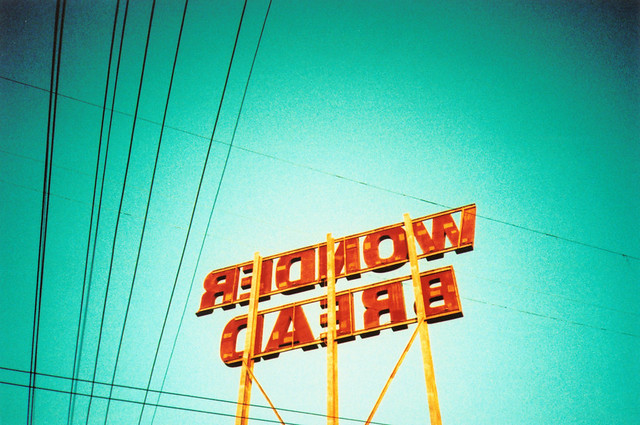
Wonder Bread from Flickr via Wylio
© 2006 William Clifford, Flickr | CC-BY | via Wylio


Many of us grew up eating fluffy white bread, and Aaron Bobrow-Strain explains why those loaves were virtually all that was available for a time, and why they have fallen out of favor now.

As this book described the pendulum swing of food fads (from dark homemade breads, to fluffy white "sterile" loaves, then back to dark artisan loaves), I saw myself and my bread choices. It was a bit eerie to see something as specific as the kind of bread I buy described so clearly as a response to a food fad.

Friday, June 6, 2014

Book 9: Year of No Sugar

Remember when I said, "No more 'Year of . . .' books"? Well, I'm glad I made an exception for this one.


Eve Schaub and her family made the decision to avoid sugar and fructose-sweetened everything for a year. If you've ever tried to avoid added sugar in its many forms, you know it's in pretty much everything you can buy at a store or restaurant, outside the produce section and meat department.

To me, the most impressive part about this experiment was that Eve had two elementary school age daughters who also agreed to the challenge. If you think you'd like to change the eating habits of your young children in a way that seriously goes against the grain, this book gives insight and ideas.

Wednesday, June 4, 2014

Book 8: Grain Brain

This book claims that grains are not only bad for your weight and pancreas, but also they're bad for your brain.


This was an interesting book, but I have a healthy dose of skepticism about anything that says that being gluten free prevents and/or reverses a wide variety of illnesses and conditions, including Alzheimer's disease, dementia, ADHD, anxiety, and depression.

I'm not going grain-free, just so you know.

Saturday, November 23, 2013

Book 70: Tomatoland

According to this book, if you've eaten a tomato in winter, or one at a fast food joint, you've eaten a tomato grown and picked by slave labor. And here's the thing: it probably didn't even taste good.

Tomatolandcover

This book is about what it takes to grow tomatoes year-round for the U.S. market and what the consequences of that are for worker health, worker rights, and the environment.

Thursday, September 26, 2013

Book 59: Cooked

It's been a very slow month for reading. But I did have a real treat to listen to: Michael Pollan himself reading his newest book.

cooked-cover

I loved it. In addition to describing his experiences learning various cooking techniques, it discussed the philosophy of cooking and food preparation quite extensively: What does it mean to roast a pig over coals? What is the meaning of cheese? Right up my alley.

Michael Pollan can come and barbecue a whole pig in my backyard any day.

Monday, July 22, 2013

Book 47: All Natural

This was not at all the book I was expecting, but I loved it.

book cover

I was expecting one of those 12-month-life-experiment books that seem to be everywhere these days. I thought this one would be about a guy who tried to live "all natural" for a year.

But instead, it was an investigation of the tension between modern technology and "natural" approaches in several different areas. It was a very nuanced discussion and I have a lot to think about now. The writing was also a delight to read.

Wednesday, June 5, 2013

Book 38: Salt Sugar Fat

Ahh, processed food, why are you so tasty? This book will tell you, and it ain't pretty.

Salt Sugar Fat

My takeaway: Processed foods are awful in so many ways. "Healthier" processed foods are not going to improve your health. Whole foods, prepared at home, are the way to go.

And so I'm off to the kitchen.

Sunday, May 26, 2013

Book 36: The Kitchen Counter Cooking School

If I weren't on the road right now, I'd be making some homemade vegetable broth.


Kathleen Flinn is a le Cordon Bleu graduate and she began giving a series of free classes to a group of volunteer home cooks (or home reconstitutors of dehydrated packaged foods) to increase their ability to cook quality whole foods.

Really, this stuff should all have been pretty obvious, but somehow I (and the volunteers) hadn't figured it out. Food tastes yucky? Maybe you need better-tasting ingredients, like real broth instead of a bouillon cube. Maybe iodized salt isn't very tasty and something else would taste better. Maybe you need to roast your veggies at a higher heat for a shorter amount of time!

I have gotten a bunch of great ideas of things to do to improve my cooking, and I actually want to give them a try.

Monday, April 29, 2013

Book 29: Good Calories, Bad Calories

Given my suggestibility, you might think that having finished this book, I have now gone low-carb. I am not a low-carb person--it is virtually impossible to be truly low-carb and vegetarian/vegan, so it is not really my thing. But I did find the book interesting anyway. I have given some thought to being more cautious about refined carbohydrates like flour (even whole grain flours).

File:Good calories bad calories book.jpg

The book is so full of research that it's hard to imagine how scientists have not come to these conclusions--Taubes makes it sound like it's *so obvious* that insulin is the issue, not calories. But it makes me wonder how it could be so obvious and yet missed by so many.

In light of my intermittent fasting, I did like his explanation of waves of hunger possibly representing the body switching from using glucose as fuel to using glycogen and ketone bodies, and I like the idea that the brain might run better on ketone bodies than glucose! Bring on the fasting for brain power.

This is a 26-hour beast. Woe be unto the one who loses her place in the middle on an iPod Shuffle.

Friday, April 26, 2013

Book 28: The FastDiet

After I finished reading Food in Jars, I bought a water bath canner. Before I even started reading The FastDiet, I started intermittent fasting. Clearly, I'm very suggestible.


We watched the BBC Horizon documentary called Eat, Fast and Live Longer and jumped right in. I knew about research that showed that people who restrict calories essentially for their entire lives have longer, healthier lifespans, but most of us (including me) aren't superhuman enough to be able to do that. I'd also heard an episode of our local NPR station's program Radio West about the benefits of fasting. I've fasted for religious purposes, but not for health reasons. And having been pregnant and/or nursing for many a year, I haven't fasted in a long time.

The book gave some important details that have helped us have successful fasts, and it has fasting meal ideas, which are also really helpful. But I know there is more research out there about fasting and health, and I would have liked to read more about it. There was a little too much anecdata--I really didn't want to read tweets from 5:2 fasters. The cover (though I had the Kindle version) also looks like something designed in the 1980s. Maybe that's trendy now and I'm hopelessly un-trendy?

Overall, the idea of fasting is great, but the book was a little bit goofy. I personally have discovered that fasting won't cure you of a sinus infection. How's that for anecdata?
Wednesday, April 24, 2013

Book 27: Food in Jars

I almost feel like this doesn't count, because there wasn't too much narrative or exposition in this book; it includes a lot of recipes, and I can't claim to have actually read every ingredient and every stop in the process. But I did read most of them, so I'm counting it!


The recipes and ideas in this book sound scrumptious! I was drawn to the book because of the premise that one can preserve small quantities at a time, instead of putting up dozens of quarts of something. I am determined do some preserving this year.