Showing posts with label international issues. Show all posts

Friday, December 26, 2014

Book 42: Second Suns

If you're interested in global health and global poverty, this is a very readable look at the power of eye surgery to improve lives. Second Suns follows the lives and work of two eye surgeons and the work they do to provide cataract and other eye surgery to people with preventable blindness.


The methods used by these two surgeons to bring sight to as many people as possible are inspiring.
Sunday, June 15, 2014

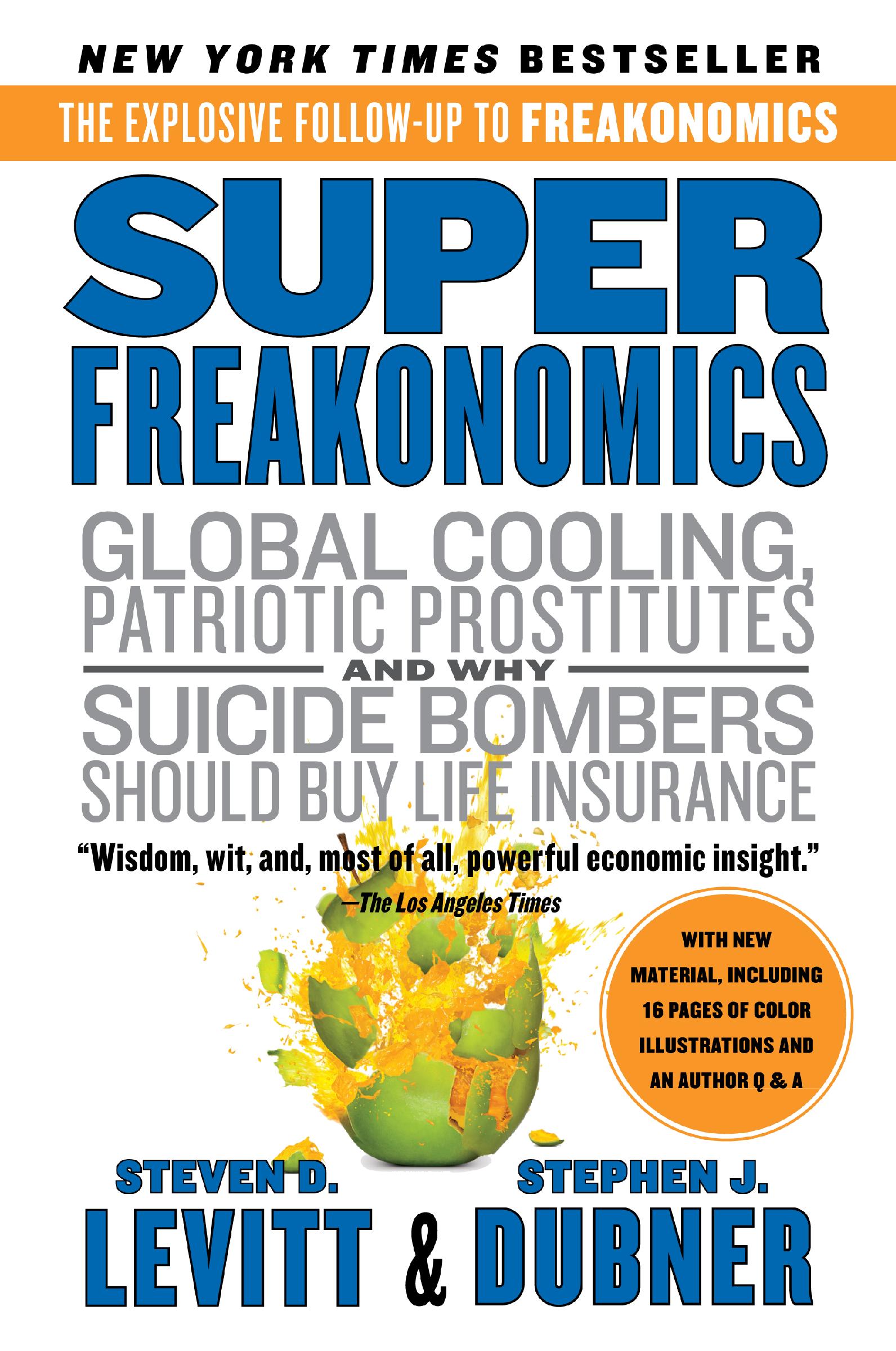
Book 11: Super Freakonomics

I read the original Freakonomics book several years ago and really enjoyed it, but this one wasn't as compelling. I don't know what was so "explosive" about it.


The chapter on climate change was just too long and seemed to take over the book. It felt like that was really what they wanted to write about, while the rest of the book was filler.

Friday, January 3, 2014

Book 1 of 2014: The International Bank of Bob

I've lowered the bar considerably for 2014, as we prepare for the arrival of not one, but *two* babies. If I read more than 26 books this year, so much the better! But we'll see what happens.

I started this one in 2013 but didn't finish it until January 1. I was almost sad to see it end. Bob Harris had a moment of cognitive dissonance while writing about luxury travel around the world, seeing the migrant workers who build the luxury hotels and the women earning $2 a day cleaning them. He invested the earnings from the travel writing in microloans through Kiva.org.

The International Bank of Bob

This was such a delight to read. It was funny and touching, and full of empathy. Bob seems to see his family and himself in almost everyone he encounters around the world.

Come join me on Kiva!

Saturday, December 21, 2013

Book 78: The Idealist

I was so excited to read this. And it really was fantastic.


In 2005, economist Jeffrey Sachs wrote a book called The End of Poverty, in which he outlined specific steps that could be taken to alleviate the world's most extreme poverty. His passion about the subject is really quite inspiring--basically, he challenges people to either sit back and allow their fellow human beings to suffer and die, or to do something about extreme poverty.

The book follows the funding and establishment of Millenium Villages, where Sachs' ideas were put into practice. Sadly, there are a lot of unintended consequences of all of these ideas, and things don't turn out quite as anyone expected.

Thursday, August 15, 2013

Book 52: This is No Ordinary Joy

Human trafficking is a huge problem in many countries. In some poor villages, virtually every young girl has been sold into the sex trade, and children of both sexes are sold to do factory or agricultural work. Millions of women, men, girls and boys are enslaved in various ways around the world.

This is Nor Ordinary Joy cover image


Sarah Symons began an organization called Made by Survivors, which sells jewelry and handbags made by young women who have been rescued from slavery. Made by Survivors trains girls and women in a trade so that they have a way to support themselves (and often their young children) outside of prostitution. The organization also sponsors at-risk children so they can attend school. Educating a girl to the tenth grade or above virtually guarantees that she will not be trafficked.

This book is the story of how Made by Survivors began and grew. I found it particularly inspiring because when Sarah began her organization, she had two young children. She mentions that parents of young children can be more energized to do this kind of work, but I wish she had given a few more details about the logistics of parenting full time while being deeply involved in a humanitarian cause.

Wednesday, May 8, 2013

Book 32: Little Princes

This was another unexpected pick, chosen out of a bit of desperation. It turned out to be surprisingly good.


Conor Grennan sounds, at first, like a Gen X-er without much to motivate him except pleasure, but an off-hand decision to volunteer at a Nepali orphanage changes that forever.

Although the book seems simple, it discusses some of the very complicated issues of reuniting trafficked children with their families.

Saturday, May 4, 2013

Book 30: Mountains Beyond Mountains

I almost didn't pick this to listen to. It was a second choice, after my first choice couldn't be put on an Apple device. I'm so glad that that's how it worked out, because this was amazing.


Dr. Paul Farmer is the founder of Partners in Health (called Zanmi Lasante in Haiti), an organization that provides medical care to the poor. Zanmi Lasante has built a comprehensive health system on the Haitian central plateau. Farmer is an advocate of social justice and liberation theology. He seeks to offer a preferential option to the poor--they receive no less care than those who can pay for treatment.

Kidder recounts that Dr. Farmer often carried two photos with him when he traveled: one of his own toddler daughter, and another of a young child with kwashiorkor. He would show one or the other of those photos to people he met. The message is that one's own child is not more valuable than a poor child; no child is worth more than another.

Friday, April 5, 2013

Book 24: The Story of Stuff

Do you remember the 20-minute Internet film from a few years ago, by the same name?


This was a great book, but it does feel really overwhelming to tackle these enormous, system-wide problems of toxic processes, toxic products, and toxic disposal. There seems to be a huge need for change, especially among people like me--developed world consumers who buy and discard a lot of stuff.

Annie Leonard details the many actions we can take as individuals to keep our homes free-er from toxic stuff. We can also perhaps ever-so-slightly reduce demand for cheap junk (that, in the process of being made, produces a lot of detrimental effects for people in other communities) that doesn't make us happy or more fulfilled, either.

A few ideas that really struck me were that if something is too toxic for my child to play around or use, then it is too toxic for any child. Also, I have long realized that there is no "away" that things get thrown to--no magic place where "trash" ceases to bother anyone. But I didn't realize just how damaging and wasteful landfills are.

Saturday, March 16, 2013

Book 19: The One World Schoolhouse

I'd heard of Khan Academy on a homeschooling board I hang out on, but I didn't exactly know what it was all about until I heard an interview of Sal Khan on NPR. His intention is to provide a world-class education to everyone, for free or very little cost.


Khan talks about how mastery of foundational concepts, especially in math and science, is essential to understanding more complex ideas, and we should not force (or allow) students to move on until they have shown mastery. Hmm, sounds a lot like some language learning software I've worked with before. It also fundamentally turns the time-based school year on its ear.

Khan proposes providing his videos and problem-generating software to students in developing countries so that they have access to quality education, too. This now seems like real possibility, with the development of inexpensive tablet computers.

I registered for an account at KhanAcademy.org and started at the beginning with math (studies show that the best predictor of a good math teacher is a solid understanding of math concepts). I'm happy to say that so far, I have achieved mastery of addition of one-digit numbers.

Saturday, January 26, 2013

Book 6: Half the Sky

I will not call this a feminist book, because it is really a book about humanity, though focused on what the female half of humanity can contribute to the world, and what barriers they face in making those contributions. Calling these feminist issues, the authors say, makes it easy to dismiss and ignore them.


The authors focus on a few major issues that have enormous power to transform developing countries and indeed the entire world: human trafficking, education, maternal mortality, and economic opportunity. Where women get more education, have more economic opportunities like small businesses, have healthier pregnancies and births, and are not at risk of forced prostitution, people are physically healthier, societies are less violent, and communities are economically stronger.

This is the kind of book that makes you want to get involved and do something more around the world. For more ideas of what you can do, visit Half the Sky's website for a list of their NGO partners who have proven strategies for helping women and their families.

Friday, January 11, 2013

Book 3: Kabul Beauty School

I happened to grab this at the library because it looked interesting, and I was not disappointed.


The stories of the women Debbie works with are sad, funny, frightening, and inspiring. Debbie's idea to open a beauty school may seem shallow at first glance--beauty in a war zone? But the graduates of the school are able to increase their income dramatically, and their whole families benefit.

Monday, December 17, 2012

Book 81: Banker to the Poor

After reading Behind the Beautiful Forevers and Bright Lights, No City, I wanted to read a bit more about poverty alleviation, specifically through microfinancing.

Banker To the Poor

I figured I should start my reading essentially at the beginning of microfinancing with Muhammad Yunus and Grameen, his Bangladesh-based bank that began with a loan of $27 to a group of poor villagers. This is a great book, and full of hope. I got up from reading it one night after midnight and participated in another loan through Kiva, a worldwide microfinancing/social media organization.

Wednesday, December 12, 2012

Book 79: Behind the Beautiful Forevers

You know those books that are at once both incredibly good and terribly discouraging?


This is one of those. It's a nonfiction account of life in a slum in Mumbai. The people there show ingenuity to feed, clothe, and house themselves. But the corruption in institutions in India and among the non-profit foundations supposedly helping slum dwellers and orphans is so depressing.

Sunday, December 2, 2012

Book 77: Bright Lights, No City

This book was an unexpected gem. I picked it up because it's about Whit Alexander, the creator of the game Cranium, and I love Cranium. Strange reason to read the book, huh?


After selling Cranium, Whit started a business called Burro in Ghana, renting rechargeable batteries to people who have no or very limited access to electricity on the grid. Whit's business is based on, and the book discusses in some detail, the idea of creative capitalism. Bill Gates spoke about it at Davos in 2008, when he said,

In a system of capitalism, as people's wealth rises, the financial incentive to serve them rises. As their wealth falls, the financial incentive to serve them falls, until it becomes zero. We have to find a way to make the aspects of capitalism that serve wealthier people serve poorer people as well.
The book is full of intriguing ideas about international aid and doing business in a developing nation. And it's just a fun story to read, too.